Three dates of the year
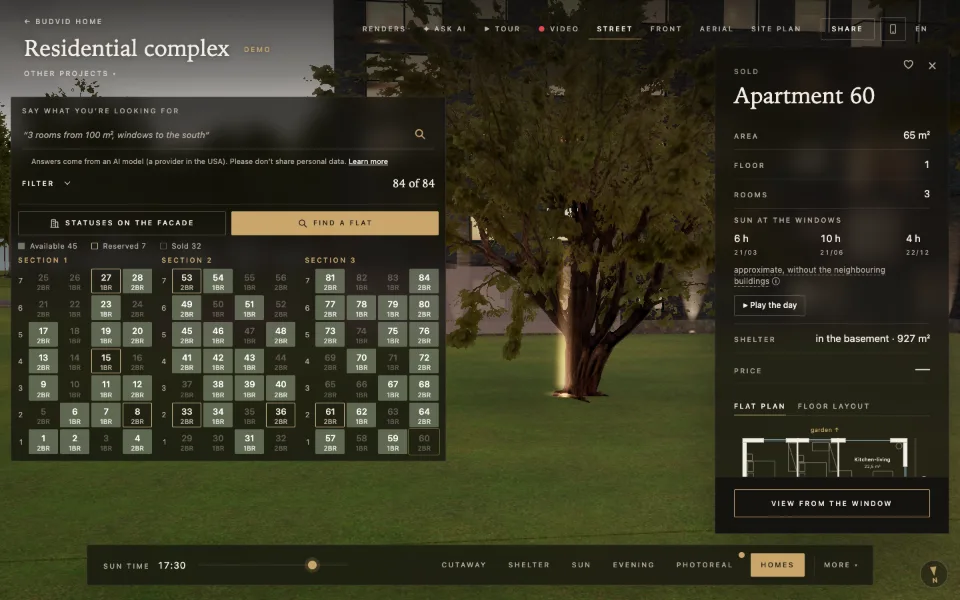
21 March, 21 June and 22 December: how many hours direct sun reaches at least one of the flat’s windows, sunrise to sunset in 10-minute steps.
For developers, agencies and family houses
A buyer opens a flat and sees how many hours of direct sun it gets in winter, spring and summer — with the shade of the buildings and trees around it. Not “the sunny side” in a listing, but figures for every flat on the 3D model of your building.
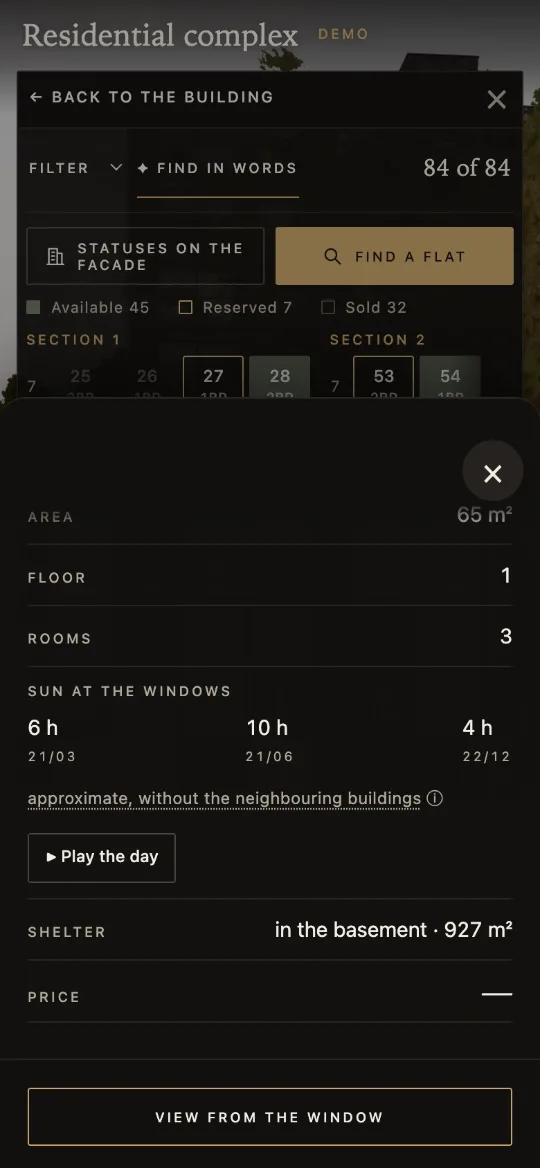
21 March, 21 June and 22 December: how many hours direct sun reaches at least one of the flat’s windows, sunrise to sunset in 10-minute steps.
It counts the latitude, the floor, the shade of the building itself, the balconies above the windows and the trees on the plot (in leaf in summer). A ground-floor flat behind a tree can get less than the same flat above it.
Enter the plot’s address and the buildings next door stand round it from OpenStreetMap, with heights from the map or estimated from the footprint. Their shade counts too.
Under the figures: “approximate” and whether the neighbours are counted. One tap and the buyer reads exactly how it was worked out. Clouds and curtains are not counted — and the card says that too.
For a family house and townhouses it is not just the windows but the garden: where the lawn will grow, where the terrace goes, where it is always in shade.
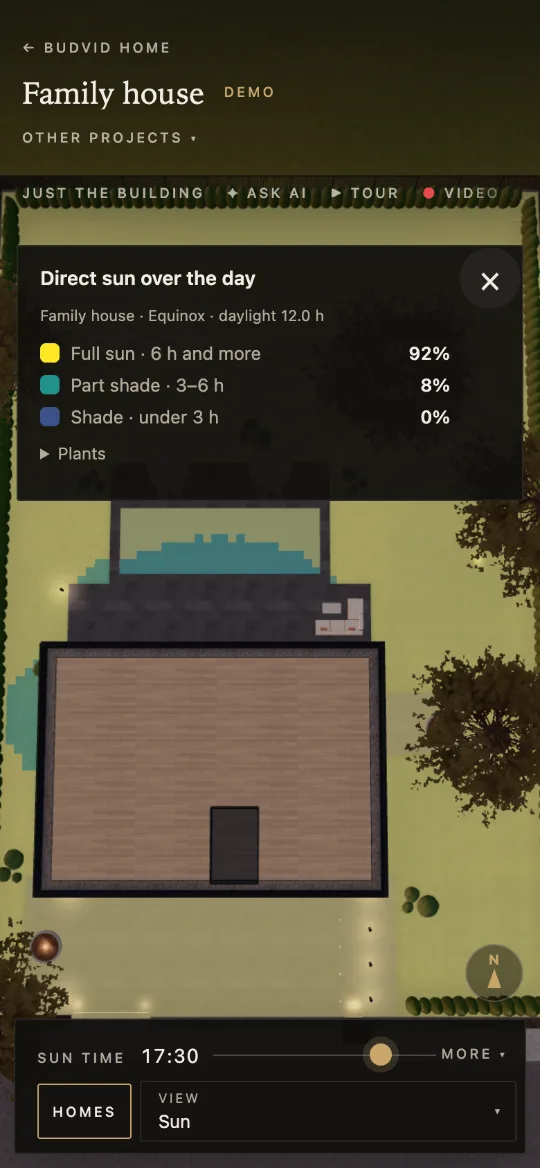
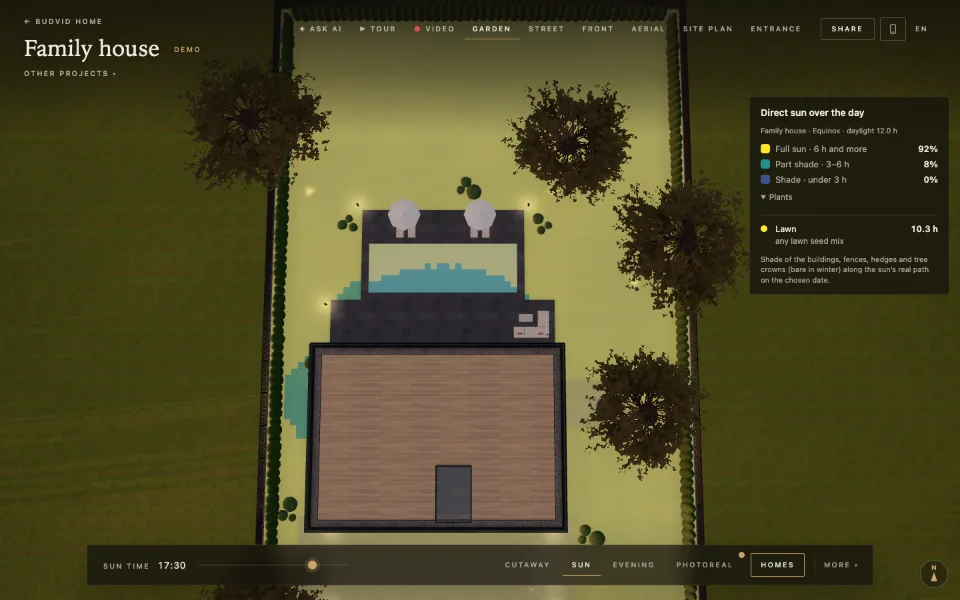
The plot from above, coloured by hours of direct sun over the day: 6 hours and more, 3–6 and under 3 — with the share of the plot in each.
Buildings, fences, hedges and tree crowns, along the sun’s real path on the chosen date. In winter the trees are bare.
A lawn, a hedge, box — each with a tip for the sun it gets: any lawn seed mix, a shade mix with red fescue, or “lawn won’t hold: periwinkle, ivy or mulch”.
The sun-time slider moves the sun and the shadows on the 3D model; “Play the day” runs it from sunrise to sunset. Summer, the equinox or winter.
It is an approximate figure for buyers and the sales team, not a regulatory daylight or sunlight assessment for planning documents. Those need a study by the project’s designer. Budvid shows a buyer how the sun moves through their home — in plain figures and on the model.
Sun at the windows and the sun map come with every plan — no extra cost.
$1 for 7 days: one project, AI tracing, leads to Telegram.
$29 a month: a house, townhouses or a cottage village with a sales chart and instalments.
$79 a month: up to 3 apartment complexes, leads to CRM and Telegram, an API.
$199 a month: up to 15 projects for a developer with several complexes.
For every flat: how many hours direct sun reaches at least one of its windows, sunrise to sunset in 10-minute steps, on three dates — 21 March, 21 June and 22 December. It counts the latitude, which way the windows face, the floor, and the shade of the building itself, of the balconies above the windows and of the trees on the plot. Not clouds or curtains.
Yes, when the project has the plot’s address: the buildings next door come from OpenStreetMap, their heights from the map or estimated from the footprint. Without an address there are no neighbours, and the flat’s card says so.
No. It is an approximate figure for buyers and the sales team, not a regulatory daylight or sunlight assessment for planning documents. Those need a study by the project’s designer.
A view from above with the plot coloured by hours of direct sun over the day: full sun (6 hours and more), part shade (3–6) and shade (under 3). With the shade of buildings, fences, hedges and tree crowns, bare in winter. And what to plant: a lawn, a hedge or box for the sun it gets.
Yes. The sun-time slider moves the sun and the shadows on the 3D model, and “Play the day” runs it from sunrise to sunset. The season is summer, the equinox or winter.
Sun at the windows and the sun map come with every plan at no extra cost: a house or townhouses from $29 a month, a complex $79 a month. To try it — a 7-day test drive for $1.
Open the complex demo and tap a flat — the sun at its windows is in its card. The sun map of the plot is in the family-house demo, under “Sun”.